A social enterprise helping people on the autistic spectrum and the people around them.


Blog
4 Conversation techniques to add to your social script
Posted: 12 months ago
Many autistic people create for themselves a 'social script' to help them know how to interact in social situations. A social script is a guide for planning what to do and say inside a social setting.
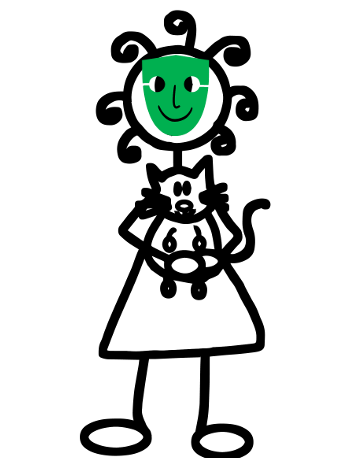
The Girl With The Curly Hair uses a social script whenever she meets up with her friends. Specifically, she uses 4 conversation techniques:
How to help someone avoid masking
Posted: February 22, 2020
Masking is a word used to describe the behaviours by autistic people in order to 'hide' their autistic traits. As well as causing anxiety and exhaustion, another consequence of masking is that other people do not get to see the true person. This is a very sad situation to be in because it can ruin an autistic person's relationships. If an autistic person is never themselves around someone then it leads to the other person building up a false idea of their personality. This makes the other person have expectations of the autistic person that they are unlikely to be able to meet or maintain over the long term. In the end, the relationship is a great stress for the autistic person. In order to have a sincere and meaningful relationship with an autistic person, a neurotypical person could try doing some things in order to encourage the autistic person not to mask, and to help them "come out of their glass jar" a bit. Here are some strategies that I suggest: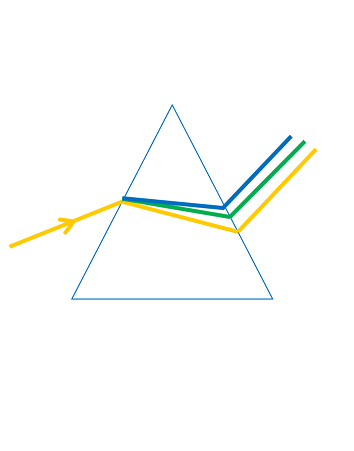
Just how big is the autism spectrum?
Posted: February 14, 2020
I have been reviewing some of my resources and, interestingly, I have started to feel a bit uncomfortable about some of the things I have previously talked about! It is amazing how time can change perspective. At the moment, the thing I'm feeling most uncomfortable about is the clear divide/separation between autistic and neurotypical people that I have often created. I have purposely had to emphasise this divide in order to teach people about the autistic experiences, but the divide is much less obvious in the real world. In my work, for the purposes of teaching, I've tried to say, "this is the autistic way" and "this is the neurotypical way." But in the real world there is often no straightforward "autistic way" and no straightforward "neurotypical way." You can't 100% say, "Alis does this because she is autistic", and you can't say "John does this because he's neurotypical." Alis might well do that because she is Alis, and John might do that because he is John. Also, behaviours we observe on the outside are not always accurate representations of what's on the inside. Just because Katie appears "neurotypical," on the outside, it does not mean she is. You cannot easily tell whether someone is neurotypical or autistic. A lot of people put on an act when they are in public. Also, many people have autistic traits but do not have autism.
10 ways to live in the moment
Posted: February 11, 2020
Living in the moment is a strategy that I use to reduce my anxiety. I didn't used to live in the moment but I can say with certainty that ever since doing so, life has confidently been a lot more comfortable for me. Here are 10 ways that I do this every day: 1. Focusing on what I am doing It’s often said that autistic people have an ability to ‘hyperfocus’ (deeply concentrate) on activities. If I am living in the moment then it facilities my ability to hyperfocus. I don’t think about anything other than what I’m actually doing right now. It enables me to create high quality work, get tasks finished and experience satisfaction! If I wasn’t living in the moment, this hyperfocus ability would not be utilised or appreciated (and it’s such an awesome ability to have!).
3 essential things to help your daily life
Posted: January 31, 2020
Olympic weightlifter Michaela Breeze provides some really motivating educational resources. I was watching one of her videos and came across one where she talked about overcoming the battles she faced in weightlifting. She mentioned 3 helpful ideas used in order to get over any obstacles or overcome plateaus in weightlifting. This was obviously helpful to me in my weightlifting, but it also made me think outside the box, and I thought about the way I face my challenges in day to day life. I could say that I use those 3 ideas in weightlifting and also to help me in daily life. Those 3 ideas are:
The Pockets Theory
Posted: January 20, 2020
In music theory, when a person is singing, their words are supposed to 'land' at particular points in the song. When their words don't land on these positions, the singing sounds 'off'. However, there is a 'pocket' around those exact points in which the singer can still sing their words, and the singing will still sound good. I thought this idea was very interesting and it made me think about how it can be applied to everyday life to make everyday life easier for us. Autistic people may be prone to being perfectionistic, wanting things to be very exact, correct and literal, i.e. they want things to land exactly on those particular points each and every time. Let's look at this in a diagram: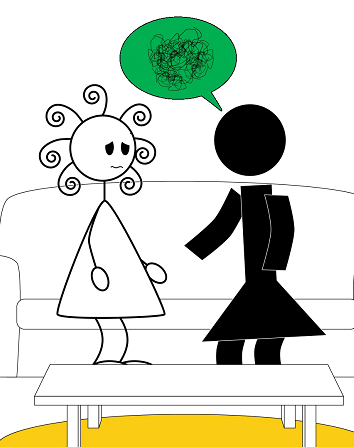
How does social anxiety differ for autistic people?
Posted: January 9, 2020
Long before I knew I had Asperger's Syndrome, my GP said I had social anxiety. I did some reading on social anxiety and although it did sort of fit me, it wasn't an exact fit. Most of the literature on social anxiety talked about people who have self-critical, negative thoughts such as... "Nobody likes me" "What if I make a fool of myself?" "I'm such a failure at socialising" I sort of had these thoughts, but wasn't really sure. Those thoughts were probably more linked to being young and feeling insecure generally rather than anything else. As I got older and after I was diagnosed with Asperger's Syndrome I realised that the thoughts I was actually having were more linked to my social communication difficulties rather than believing people to be judging me. I like myself and I know that I am a nice person! So once I fully understood and accepted that I had Asperger's Syndrome, I no longer had those sorts of thoughts at all. The reason for my social anxiety, now that I know I have ASD, is more to do with finding social interactions extremely difficult and overwhelming.
Investing in yourself
Posted: December 30, 2019
I have always been very cautious about spending money. My dad taught me from a young age the importance of saving. He would always say, "Are you sure you can afford that?" whenever I was considering purchasing something expensive. To this day, every time I spend money, I always have that nagging feeling in the back of my mind!! I am really glad for his advice because 1) I have learned the value of money and 2) I have managed to save money... however... saving is not always the best option. In fact, saving money can actually restrict us. I have learned that it can be better to invest money instead. This article is about the importance of investing, BUT I don't exclusively mean investing money, I am also referring to investing your energy, emotions and your time. It only recently occurred to me that there are so many other ways to invest in yourself. All these other ways will be discussed in this article: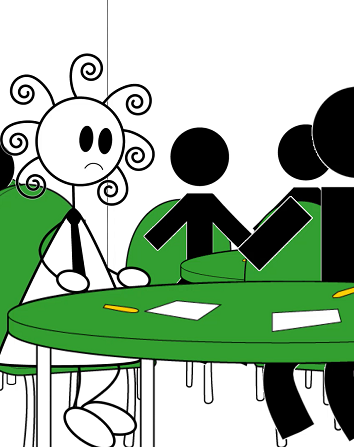
How to more easily collaborate with others
Posted: December 19, 2019
Like a lot of people on the autism spectrum, I have rigid routines and ways of doing things. This inflexibility is actually a method of coping and being able to do things well, rather than me being difficult. If I don't have such rigid plans and sequences, then I feel completely bewildered and nothing gets done at all. But what happens when your workload becomes so high that you feel you could benefit from the help of others? Or when you just feel a bit overloaded generally and could do with some practical support from others? How do you fit these people into your rigid routines? This is a massive problem that I face. As soon as other people get involved in my life, things start to go wrong - deadlines get missed, schedules get disrupted, inaccuracies occur, or people just do the wrong thing despite having good intentions. Often it means I end up having to do more work. It's not their fault though. It's just that, because of my Asperger's Syndrome, my life has to be extremely rigid and accurate. If it's not rigid and accurate then my anxiety becomes extremely high and I find it difficult to function.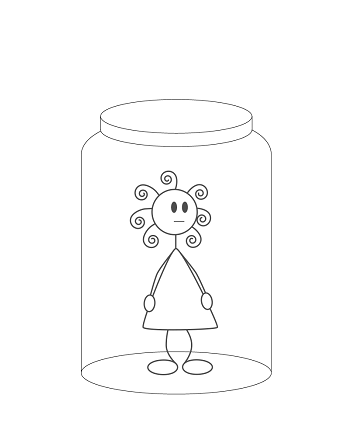
Autistic introversion vs autistic extroversion
Posted: December 9, 2019
I always used to think that autistic people could only ever be introverted. As The Curly Hair Project developed, I soon realised this belief was completely false, because I have come across so many autistic extroverts. In this article I want to discuss why people might have the belief that autistic people are introverted, what the differences are between autistic introverts and extroverts, and how we can possibly support each type so that they have a fulfilling and enjoyable life!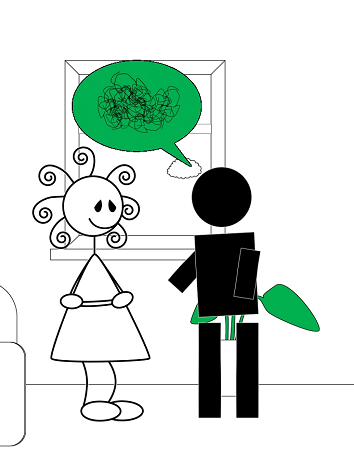
Does talking help?
Posted: November 29, 2019
There is a belief that "talking helps". That has never been my experience. A lot of the time I find that talking about my feelings makes me feel worse than before. I wanted to summarise why this might be.