A social enterprise helping people on the autistic spectrum and the people around them.


Blog
4 Conversation techniques to add to your social script
Posted: 12 months ago
Many autistic people create for themselves a 'social script' to help them know how to interact in social situations. A social script is a guide for planning what to do and say inside a social setting.
The Girl With The Curly Hair uses a social script whenever she meets up with her friends. Specifically, she uses 4 conversation techniques:
The Dissociation Effect
Posted: November 19, 2019
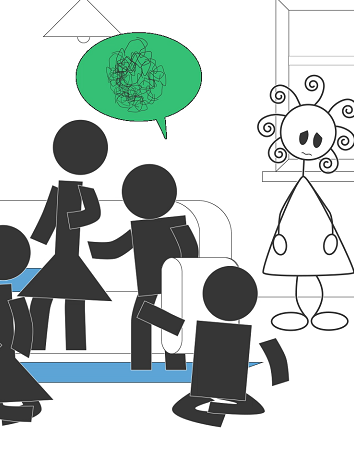
The Dissociation* Effect is a way to describe what autistic people might experience during a group social situation. It also describes what neurotypical people might experience in comparison. *Note that 'Dissociation' is a recognised psychological experience with trauma. It is not the same as what I am talking about in this article. Watch our awesome animation to see The Dissociation Effect explained:
What is Executive Function?
Posted: November 11, 2019
Executive function is the set of mental skills that helps people get things done, such as planning, working memory, organisation and how to manage the steps of a task. Autistic people tend to have weak executive function and struggle with these mental skills. Watch our amazing animation to understand a fantastic explanation of this complicated idea: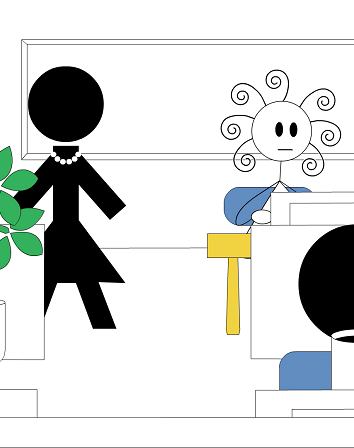
New film – episode 5 now available
Posted: November 9, 2019
We have just released episode 5, 'A Day in the University Placement Year for The Girl With The Curly Hair', in our short film series! This film showcases The Girl With The Curly Hair's first experience of work. She is working in a science measurement and testing company for a year, as part of her university degree. You can watch it on the website here.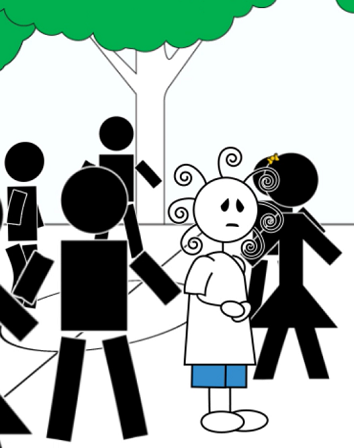
The mystery surrounding anxiety
Posted:
When I was younger I used to feel anxious most of the time. The point is, I didn't realise that it was anxiety. I knew I was "quiet", but the word "anxious" was never really brought up. Everyone called me "quiet". Quiet is a very common word and even children know what the word quiet means. What no one explained however, and what I did not realise at the time, was that "anxiety" can sometimes cause someone to be "quiet". And "anxious" can be much more of a problem than "quiet" is. "Anxiety" was a complete mystery to me.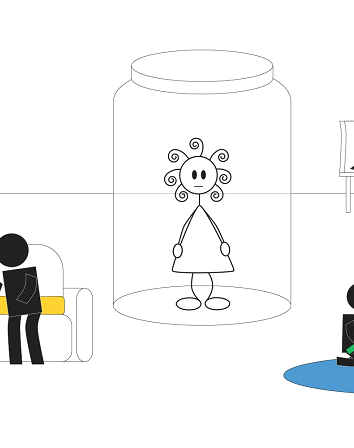
The Glass Jar Theory
Posted: November 3, 2019
The glass jar represents the difficulties that an autistic person has, which makes them feel that they are living inside a glass jar. Watch our amazing video to see how being inside a glass jar might make a person feel:
Do you control life or does life control you? The Locus
Posted: October 30, 2019
The question of whether or not you can control your life, or how much degree of control you have, is very interesting. Some people think that no matter what they do, that their fate has already largely been determined. Others believe that they can change or direct their future. You could think of these beliefs as two extremes 1) that outside factors influence what happens to an individual, and 2) that an individual can influence the outcome for themselves. I discovered that this idea is well documented in psychology and is known as the Locus of Control. Understanding of the concept was developed by Julian B. Rotter in 1954. I thought I'd write about it:
Marketing Assistant
Posted: October 26, 2019
Would you like to work from home for a few hours a week during the daytime? Want to work for a fun but worthwhile cause helping raise awareness of autism across the UK? Are you happy to phone schools and other public and private sector organisations to promote our autism training and generate genuine interest?
Alis featured in Journey Skills podcast
Posted: October 23, 2019
I was interviewed by Debra, who runs Journey Skills. Journey Skills is a podcast series full of helpful information on becoming independent, for people with additional needs and their families.
Difficulty doing tasks that are ‘desirable but not essential’
Posted: October 19, 2019
Some autistic people are prone to avoiding or procrastinating when it comes to doing tasks. Here is an excellent example of someone who struggles with getting some things done, yet excels at getting other things complete: Leo (ASD) has trouble with certain tasks. He is very good at doing tasks that are compulsory such as work projects and paying bills, but anything that is sort of 'desirable but not essential', either never gets done or is left until the very last minute. An example might be the washing up - he won't do it until there are no clean plates to hand. Or the housework. It just gets left.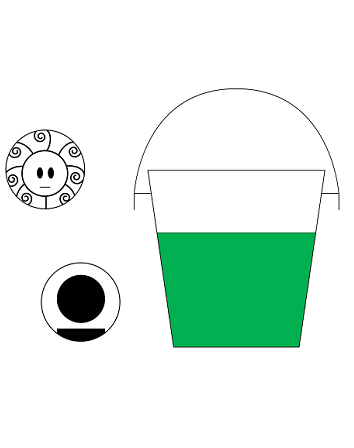
The Sensory Buckets
Posted: October 11, 2019
The Sensory Buckets is an idea I came up with to describe how autistic people and neurotypical people manage sensory input (such as smell, sound and light). It is a good way to see how different people compare. Watch our amazing video to see an example of what exactly this means when applied to a real life situation: