A social enterprise helping people on the autistic spectrum and the people around them.


Blog
4 Conversation techniques to add to your social script
Posted: 12 months ago
Many autistic people create for themselves a 'social script' to help them know how to interact in social situations. A social script is a guide for planning what to do and say inside a social setting.
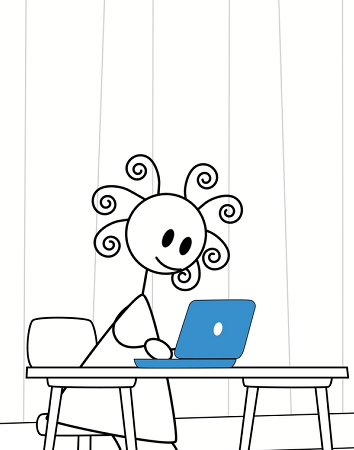
The Girl With The Curly Hair uses a social script whenever she meets up with her friends. Specifically, she uses 4 conversation techniques:
10 tips for learning online
Posted: May 8, 2020
The internet has given us amazing opportunities to learn anything we want without leaving home. However, learning from the internet is a bit different from learning in a classroom. Here are 10 things that help me learn information when I am using the internet: 1. A clear objective I find it difficult to learn unless there is a clear objective, goal or learning outcome. That's why I like tutorials that have clear titles, descriptions or opening paragraphs that tell me exactly what I am going to learn.
New film – A Day at the Vet’s
Posted: April 28, 2020
We have released a new film which shows a day at work for The Girl With The Curly Hair, who works at a veterinary practice. The Girl With The Curly Hair's manager has made some reasonable adjustments for her, but the rest of the team don't always follow them. This film highlights some of The Girl With The Curly Hair's strengths. In particular, she has two good ideas to make all of their working more efficient. It shows that thinking differently can have advantages.
Brand new e-courses now available
Posted:
Want to access training at your own time and pace? We now have e-courses! E-courses are a fantastic way to learn about autism in your own time and at your own pace. You log in to the system and access the material whenever you want. The system will remember where you are in the course.
A reminder of why my autism diagnosis is so important
Posted: April 23, 2020
Because I live a very solitary and quiet life, a life where there is very limited social interaction and where I work from home, I often forget that I have autism. Well, it's maybe not that I 'forget', but more accurately that I'm not reminded of my autism so much. I recently had to attend a large meeting (50 people) as part of a course I have joined. This is the first time I have been around people in a large group setting in around 10 years, ever since university. During that meeting, I was reminded that I am 'different'. I sometimes like to think that I'm not, but this meeting made it clear that I am. It was a highly unstructured meeting, with no definite end time, and no clear instructions as to what we would be doing. We found out during the meeting that the instructor would be selecting random attendees throughout the meeting to interact. This terrified me to the point I had a racing heart and tears in my eyes. I just wanted to leave. I was brave and I stayed. I just listened and hoped I would not be asked to speak. Luckily I was not asked to speak, and I'm not sure what would have happened had I been asked to speak, because I don't think I would have been able to.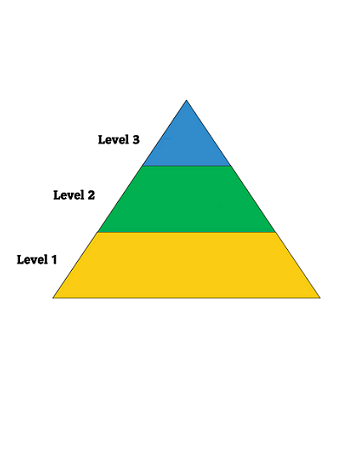
The 3 ways to connect with someone
Posted: April 15, 2020
I have often wondered why I get on well with some people and why being around others causes stress. When I thought about it, I realised that it was primarily to do with just three things!! I realised that there are three main ways that people can connect with each other and those people who I don't get on with are the ones who don't use any of these ways. I have also made a very good animation to explain this, which you can watch below! The ways can be thought of as levels: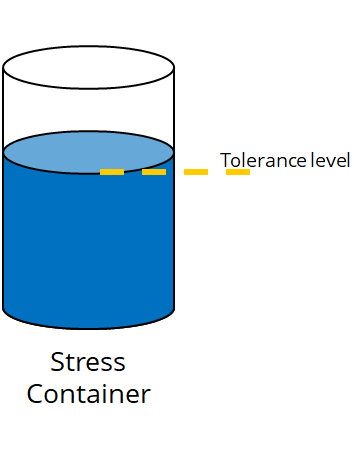
Developing a tolerance level
Posted: April 5, 2020
Tolerance can be defined as the capacity to endure something that we find uncomfortable. For the purpose of this article, I will say that we can be tolerant of two areas: 1) Situations 2) Error I think that being tolerant to an extent is a good thing, but I think it's sensible to decipher your own tolerance levels.
How can I adjust to this new way of living?
Posted: March 25, 2020
We are currently living in challenging times, in which there is a lot of change and restrictions. Currently for most people this means only being allowed out of the house once per day for exercise. I receive messages from my friends. There is a trend in what they say. They say something like, "I am well, I'm just trying to adjust to this new way of living." That sentence is very interesting. In my immediate world, not much has changed. My normal life is a life of semi-quarantine anyway! I am sure that many other autistic people also live similar, isolated lives. The greatest change for me has been observing changes in the outside world. Now, when I walk through my high street, it is deserted. All the shops and cafes I would usually go to are abandoned. All the car parking spaces at the sides of the roads, which would normally contain parked cars, are empty. It looks like a ghost town. I remember the last cup of tea I had from the cafe before it closed. I live in London. I have seen all the photos of central London in its abandonment. I know what central London is normally like. Now it is eerie. Another change for me is noticing the change in other people's behaviour. People who live 'normal' lives are no longer going out. People who usually see their family a lot, but are in circumstances where their family don't live with them, are in contact only by phone and internet. Or sometimes through a safe distance of the window as one person stands in the front garden and the other waves from inside the house! It is bizarre. If I do see anyone outside or in the supermarket, I see a lot of people wearing masks. This is now normal. People are looking different. When I go to the supermarket, many of the shelves are empty. I am no longer able to purchase my normal food. Like many autistic people, I tend to eat the same things, the same brands, and I have always tended to buy my food in bulk because I know I will eat it over a long period of time. I'm no longer able to buy large quantities of the food I like. Even on the rare occasions in the supermarket where there are multiple quantities of an item of food I like, I only buy one or two. My diet is going to have to change for the time-being.
10 ways to stay productive at home
Posted: March 19, 2020
With COVID-19, watching the television, listening to the radio and reading the news can make it seem like the world is coming to a standstill. Even if you are stuck indoors, there are still plenty of things you can do to stay hopeful and productive. When you are self isolating or social distancing, you will have more time than usual to do things: 1. Cleaning, cooking, gardening and DIY Many people struggle to get things done normally because life outside the home can get so busy and hectic. If you are stuck at home, now could be a good time to get on with these things!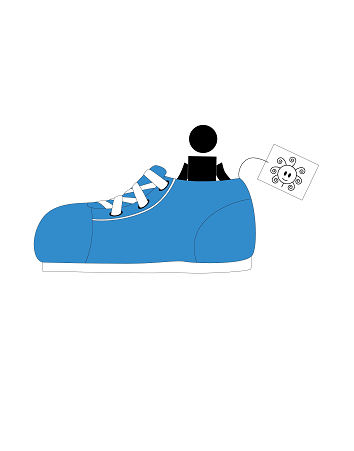
What “putting yourself in another person’s shoes” really means
Posted: March 14, 2020
There is normally some confusion over the phrase, "to put yourself in another person's shoes." It is confusing because it can be taken in two ways: Way 1) To imagine yourself in the other person's situation Way 2) To imagine being the other person in their situation A lot of people seem to do number 1, but number 2 is actually the better way to get close to someone. If this is confusing, watch our amazing animated film to understand: Am I just an introvert rather than autistic?
Posted: March 3, 2020
I have always been a very quiet person and I am happiest when I am on my own. These are key aspects of introversion, which is feeling energised when on your own, (as opposed to extroversion, which is feeling energised when you are with others). Whenever I am spending time with someone, I can feel my social energy declining, and I am always relieved to be on my own again. Not because I didn't enjoy my time with the person, but because socialising doesn't energise me. Introversion explains a lot about me. Learning about introversion has been really helpful. In fact, before I knew I had Asperger's Syndrome, I just thought that the reason I was so different to others was because I was more introverted than them. However, I have still always felt extremely 'different' to other (neurotypical) introverts - and this is because I am autistic. I created a film to explain the differences between autistic introverts and neurotypical introverts. I hope you enjoy it!