A social enterprise helping people on the autistic spectrum and the people around them.


Blog
4 Conversation techniques to add to your social script
Posted: 12 months ago
Many autistic people create for themselves a 'social script' to help them know how to interact in social situations. A social script is a guide for planning what to do and say inside a social setting.
The Girl With The Curly Hair uses a social script whenever she meets up with her friends. Specifically, she uses 4 conversation techniques:
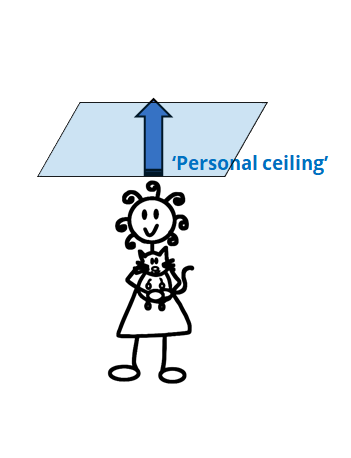
Understanding your personal ceiling
Posted: August 27, 2020
In psychology, the term 'personal ceiling' describes the metaphorical barrier between where a person is now and where they want to get to. I suppose I could also use my glass jar analogy to describe this. My glass jar seems to have many different meanings! It has been a very useful idea! Feel free to use either of the diagrams below in your understanding of the personal ceiling, whichever one makes more sense to you: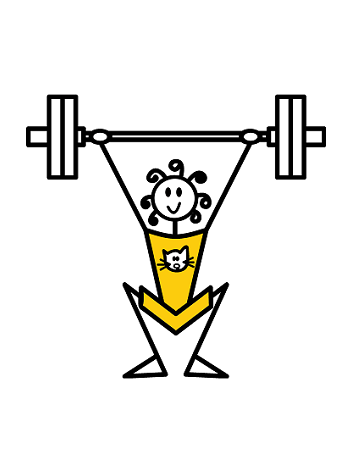
The importance of good habits
Posted: August 16, 2020
Positive habits are hugely significant in helping us along in life. They teach us to be disciplined and responsible and encourage us to put the values that drive us into practice. These attributes make it easier to achieve our goals. One positive aspect of being on the autism spectrum is that many of us are naturally inclined to want routines and consistency. One of the criteria for being diagnosed with autism is the person must have "restricted, repetitive behaviours or activities." Therefore, I think some autistic people can often have a slight advantage over neurotypical people because they may be more inclined to create habits that contribute to getting things done consistently. Three things are needed in order to have positive habits: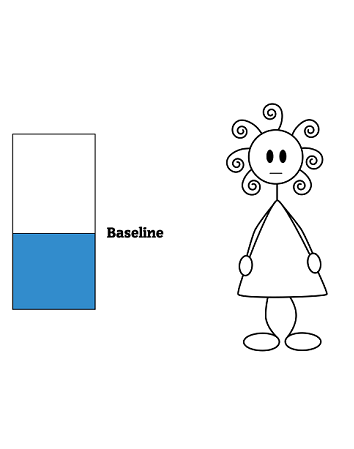
The Supercompensation Theory
Posted: August 5, 2020
I came up with the idea of Supercompensation (inspired by a concept in sports science) a long time ago and we recently made it into an animation.
Are we 80% colleagues and 20% friends, or are we 100% friends?
Posted: July 25, 2020
My social network is quite big but there are only a very small number of people who I would call my friends. This is because when I met these people, the only mutual motivation we had, was that we liked each other's company and wanted to carry on seeing each other. There was a natural spark between us. This is in comparison to the people I've known through education and work. My initial reason for being around those people is that we were doing the same course or worked for the same company. If we had a spark, it came after the first link we had which was that mutual work project. A mutual project is a really strong way to support my attempts at friendships initially. That's why I have sometimes advised in my work that a helpful way for an autistic person to make friends might be through a particular setting, such as an art club or through swimming lessons. That common interest is an ice-breaker and makes socialising so much easier because you can talk about what you are doing.
How to have an efficient workflow
Posted: July 14, 2020
I recently embarked on a very very big project that took a few months. The project was big already, but what made it bigger was that I did not have an efficient, planned out workflow. I learned a lesson about workflow that could be applied to many other activities. This lesson may be helpful to others who have difficulty seeing a project through to an end because they feel frustrated or confused. A workflow is defined as the sequence of processes through which a piece of work passes from start to finish. When you do something for the first time, you probably do not have an efficient workflow yet. This is because you don't really know what the project involves, how long things will take, what order to do things in, or even what the final work is going to look like. There is a lot of 'trial and error', figuring things out as you go along, and going back to change things along the way. You might also be asking other people lots of questions. All of this adds a lot of time to the project. You might feel exhausted and stressed by the amount of work you are doing. You might wonder how on earth other people do this seemingly so smoothly. I too have been there! The positive of all your stress and additional time is that, by the time you get to the end of your project, you will undoubtedly have learned an enormous amount. In fact, the best thing that can come out of these time-consuming and stressful projects is that you have discovered an efficient workflow.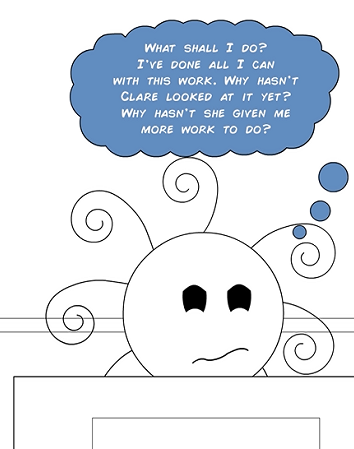
How to find your strengths and achieve your potential
Posted: July 3, 2020
Like many autistic individuals, I was a completely terrified adolescent with zero self-esteem. This meant that any abilities I had or potential skills I could have learned were restricted by the discomfort I felt in being myself. I was so preoccupied with wondering why I was different, why I didn't fit in, and trying to make myself "normal", that I was not able to appreciate my strengths (I didn't even know I had any!). Combine this with my experience of school where I was known as The Person Who Did Not Speak and who no one (apart from the bullies) paid any attention to, my strengths were not visible to anyone else either. Consequently, I never really recognised my strengths and certainly never utilised them. It was not until much later in my life that I started to realise that being different was not all negative. When I was young, I saw being different as being purely negative and I was extremely uncomfortable with who I was. It was only once I became comfortable with myself - many years later - that I was able to recognise that there were many good qualities in my character. This leads me to the point that: in order for a person to best utilise their potential, they have to first recognise what it is. They have to recognise what they are good at. If a person is very unhappy with themselves, then they will probably not be able to think about any of that. Their headspace is consumed with comparing themselves to other people and feeling inferior. So how can an autistic person best achieve their potential?
How to manage separation anxiety problems
Posted: June 22, 2020
In the previous article I provided insight into why autistic people might experience separation anxiety. Now I will look at what we can do to overcome or reduce this particular type of anxiety... Understanding separation anxiety
Posted: June 10, 2020
Something that I remember very strongly from my childhood is a feeling of anxiety whenever my parents left me anywhere, such as to drop me off at school or when they went out for a while. As an adult, I still have that feeling of anxiety even now about my parents. I also sometimes feel anxiety when I am spending time with someone and the time is coming to an end. Saying "goodbye" can be really hard. It is obvious now why such situations make me feel so anxious. The anxiety is largely caused by the transition from being with someone to being apart from them. I have learned that transitions can be incredibly hard for autistic people. The Covid-19 lockdown will likely have emphasised feelings of separation anxiety for autistic people. For example, they might have been separated from family and friends who were part of a routine. And, as the lockdown is eased, autistic people will have to get used to being apart from those they live with because of the return to school and work.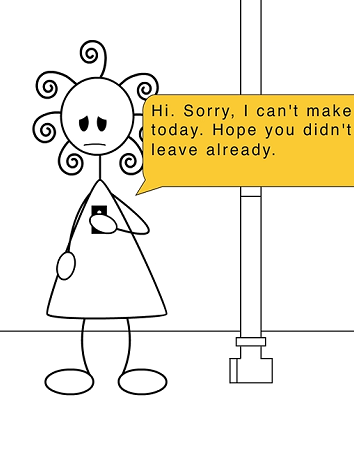
Why autistic people need others to be reliable
Posted: June 1, 2020
One of the traits I most admire and need is reliability. If I am to have any sort of meaningful relationship with someone then they must be reliable. The fundamental reason is that when a person is reliable, their actions are predictable. If their actions are predictable then my relationship with them is also going to be predictable. That means a larger proportion of my life will be predictable. When my life is predictable I feel much less anxious. My mental health is improved. What do I mean when I talk about 'reliability'? A reliable person is someone who: Communicates clearly their plans Does what they say they are going to do Doesn't tend to forget about what they said Is organised in their mind Is responsive Is punctual Doesn't often change or cancel plans These are all characteristics that many neurotypical people also appreciate and admire. However, I think a lot of autistic people will have a much, much greater "need" for this characteristic in others.
What is de-sensitisation and why is it important?
Posted: May 18, 2020
Everyone experiences phases in their life. A phase could be the period of your life when you are at school or the period of your life you are working in a particular job. Relationships have phases as well. There are phases where you might see or interact with a particular person regularly and phases where you lose touch. Change can be very, very difficult for autistic people. Therefore, transitions between phases can be problematic and it can take an autistic person a long time to 'settle' into a new phase. It can also be very difficult to transition back into a previous phase, which is what this article is about. This article was inspired by the partial lockdown we are currently in in the UK. I started thinking about how we've all had to adjust to this new life of quarantine and how it might be returning to normal. We will effectively have to return to a previous 'phase'. If you have read my book, 'What I have Learned about Life', you might remember that I wrote "I would probably never be able to go back to university again and that I would probably never be able to go back to a 'normal' type of job again". Even though I managed those experiences before, I have not done them for a long time. What I believe has happened is that, whereas I was [somewhat] de-sensitised to those experiences before, I am not now.