A social enterprise helping people on the autistic spectrum and the people around them.


Blog
4 Conversation techniques to add to your social script
Posted: 12 months ago
Many autistic people create for themselves a 'social script' to help them know how to interact in social situations. A social script is a guide for planning what to do and say inside a social setting.
The Girl With The Curly Hair uses a social script whenever she meets up with her friends. Specifically, she uses 4 conversation techniques:
What is the difference between anxiety and stress?
Posted: November 19, 2016
A lot of people (myself included) use the two terms, 'anxiety' and 'stress', interchangeably. In my opinion, there is one major difference between anxiety and stress, and that is pressure.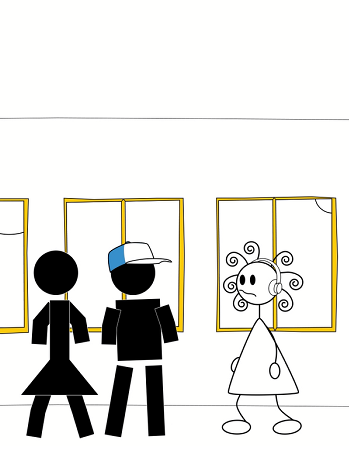
“Why are you so quiet?”
Posted: November 12, 2016
How many of you have ever had the question asked, "Why are you so quiet?" or along those lines? My quietness was commented on throughout my entire childhood - by peers as well as teachers. Yet no one ever suspected I had ASD. People thought quietness was a negative character trait. This is really sad as it can actually be a wonderful, positive trait. I always used to think what a strange thing it was for teachers to remark on, since as far as I was concerned, school was a place where students listened and teachers taught. I never used to say anything, I just used to get on with my work quietly. Why was there a problem? I was getting high marks and meeting deadlines. Even as an adult, the few times I've been in employment, I've had colleagues and employers tell me that I'm "quiet." Well, yes I am quiet, why is it such a big deal to have a quiet personality? "Why are you so quiet?" is such an odd question to ask. I would never dream of asking somebody that. It feels really judgmental. I wonder why people feel that this is an acceptable thing to say? It just seems such a ridiculous thing to comment on. In hindsight however, I understand why a teacher would comment on it. They think something is wrong and that the person's confidence needs to be developed. But never did they suspect it was a characteristic of my ASD. Being quiet can be a part of someone's personality (like mine). There may also be more to it (as in my case, too). Here are some possible reasons why a person on the autistic spectrum might be quiet: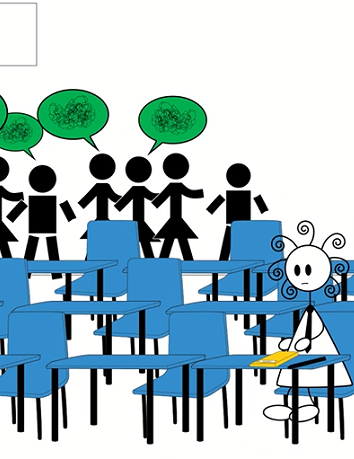
“Autism” means “self”
Posted: October 19, 2016
The word "autism," comes from the Greek word "autos," meaning "self." I've been thinking this in more depth and there are a lot of aspects to "self", it doesn't necessarily mean selfish nor does it just mean the need to be alone... Social impairments The most obvious etymology of the word describes the social impairment symptoms. The way I describe it is that the social impairments cause the glass jar to exist around every person with ASD. This glass jar makes it very hard to connect with people, even if there is a desire to. Neurotypical people don't have the social impairments - at least not to the same severity - therefore there is no glass jar (it's more like a shell if the person is "shy").
Coming to terms with change – opportunities
Posted: October 11, 2016
Opportunities (even good ones) are always hard to face - largely because, it takes me a long time to come to terms with any sort of change. Just the possibility of a change - even if it won't actually happen - makes me feel very unsettled and uncomfortable. Even if I have a choice about whether or not something is going to happen, the possibility of a change still really unsettles me. Anything that threatens the current normal/stable state always feels very frightening.Autism Awareness – 10 things to know about autism
Posted: October 10, 2016
Here are 10 things we would like the world to know about autism. 1. Autism is a spectrum condition This means that although all individuals with autism have 1) difficulties with communication and 2) unusual behaviours, no two people will be the same. Everyone is different. 2. Autism is a different way of thinking and seeing the world This means it’s important not to make any assumptions about the autistic individual you know. For example, an activity that you find enjoyab…
Doing well does not equal happiness
Posted: September 28, 2016
How many times have people said things to you such as "You're doing so well"? Many people have said this to me and continue to say it to me. In fact, I get comments acknowledging or congratulating me on my achievements on a near daily basis. This isn't the problem though - it's always nice to get recognition I am doing well at something. The problem is when people therefore end up assuming that because I am "doing well" it means that I am "happy."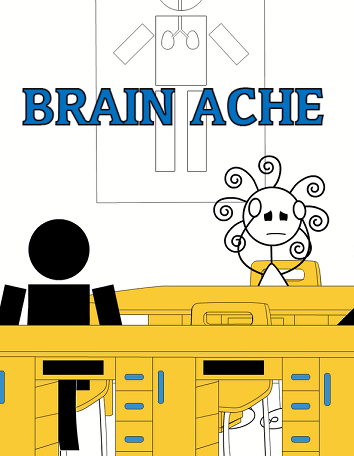
5 tips to improve executive function
Posted: September 20, 2016
Here are some tips that have helped me to strengthen some of my executive function skills. I use these tips together or separately. Some might be contradictory. They are all options for different sorts of task.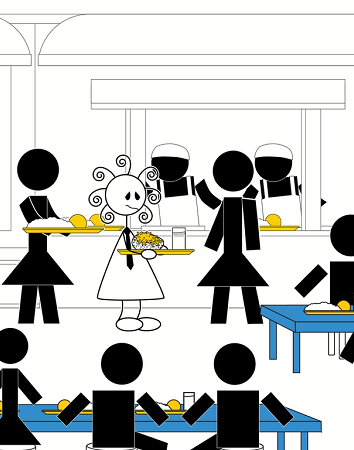
The extra importance of ‘free time’ for people with ASD
Posted: September 8, 2016
'Free time' is important for everyone in order to maintain a healthy work-life balance. Free time could be defined as the time outside the normal working day or the time allocated to seeing friends or pursuing hobbies. For people who work a 9-5 working week or for children who go to school, their free time will typically mean the evenings or the weekends. Throughout the day, breaks and lunch breaks are also sometimes considered to be free time. There are a few things to consider when we talk about free time for people with ASD. Normal day to day activities consume an enormous amount of energy for people on the autism spectrum. There are various reasons why things are so draining, including but not limited to: