A social enterprise helping people on the autistic spectrum and the people around them.


Blog
4 Conversation techniques to add to your social script
Posted: 12 months ago
Many autistic people create for themselves a 'social script' to help them know how to interact in social situations. A social script is a guide for planning what to do and say inside a social setting.
The Girl With The Curly Hair uses a social script whenever she meets up with her friends. Specifically, she uses 4 conversation techniques:
Familiarity vs predictability
Posted: April 8, 2018
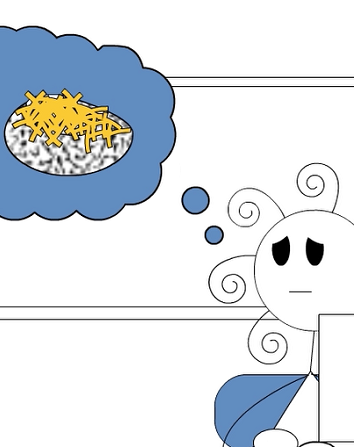
I've been thinking about what makes a situation easier for me. One aspect I talked about recently was how immediate a situation is. I debated whether doing something very soon is sometimes easier than planning it ahead of time. Something else I think makes a difference is how predictable and how familiar something is. Let's find out more.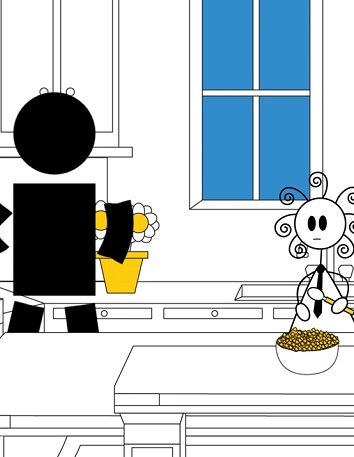
Unresponsiveness and lack of communication in ASD people
Posted: March 29, 2018
One of the reasons that having friends is hard for me is because I am not very communicative. My friends (before they understood my condition) would contact me but my responses would always be minimal and would not encourage further communication. For example, I might answer their question but then say nothing further. I'm sure many of you will be familiar with the following sorts of interaction:10 positives of autism – autism awareness
Posted: March 27, 2018
Here are 10 positive things about autistic people. Always remember that everyone is a unique individual and that these are general findings. No one will identify with all or every positive feature of autism. 1. Autistic people are usually highly dedicated to, and interested in, their interests I suspect that although everyone can have a hobby, an autistic person may have greater interest in and dedication to their hobby than the average person is to theirs. This can give us very in…
Sensitivity and reactivity
Posted: March 23, 2018
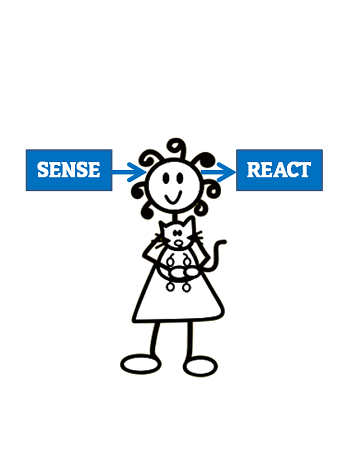
I've been pondering about sensitivity and reactivity, wondering what their link is, or are they the same thing? What are sensitivity and reactivity like in people with ASD?CHP Short Film at the Cannes Short Film Corner
Posted: March 16, 2018
We’re very excited to announce that our 2nd animated short film, A Day at Secondary School for The Girl with the Curly Hair, has been chosen to be shown at the Cannes Short Film Corner 2018! Read more about our Animated Films…
How to feel more connected with the world
Posted: March 4, 2018
Lots of people on the autistic spectrum feel very lonely and isolated. I have been thinking about one way that a person might be able to feel more connected to the world. There are other things people can do, but here is something I haven't talked about much before.
Planning in advance vs spontaneous activities
Posted: February 28, 2018
There is a big problem with planning in advance and agreeing to things ahead of time, and that problem is, that it allows anxiety to accumulate and often means that I end up panicking and cancelling. Let's have a look at this in more detail and consider in which sort of situations planning in advance might be helpful vs when it might not be.
How do I know if someone will want to talk to me?
Posted: February 19, 2018
I sometimes want to interact with someone but I am unsure how to. There are lots of worries that go through my mind any time I am about to initiate an interaction with someone (be it a colleague or even a friend). 'Working' interactions By 'working' interactions I mean interactions with colleagues, peers or strangers rather than friends. These interactions are most difficult when face to face in a public setting and there are lots of other things going on (for example, we're in a shop, in the office, or in a doctor's waiting room). I cannot read a person's body language to be able to tell if they are going to hear what I say, if they are even going to recognise me (if it's someone I don't know/know well), or to work out whether they are busy or not and therefore do they even have time to speak to me, or will I just be disturbing them?
Improving productivity using routines and schedules
Posted: February 9, 2018
I had a brief conversation with someone recently and, like lots of things, it annoyed me (lots of things annoy me). The person was asking me what I was up to. When I listed what I was doing and the time I was doing it at (I said something like "I'm going home now because I'm going to be late for dinner, which I like to eat at 5pm"), she did a big grin and said, "It's all about schedules with you!!!" The reason this comment annoyed me was because it reminded me that lots of people play down a very serious matter. Note, this was all in my head, she hadn't given me any true reason to think that she was playing it down. However, I do know that many people I've come across in the past have made similar remarks to me and it always ends up with a bit of banter and teasing by them, because they think my "like" of schedules and routines is a bit of a laughing matter. I understand that people are trying to be friendly and affectionate with me, but I do sometimes wish that people took my "like" (which, if they took the time to find out more, they would realise is actually a 'need') of schedules and routines more seriously. Maybe I just wish that people took a bit more time to understand why schedules and routines are so important, so that they had more empathy, and then I wouldn't mind the teasing so much. But so many people view schedules and routines as very superficial, flexible things... "It's only a few minutes late, stop worrying!" or "Come on now, it's good for you to do things outside your comfort zone sometimes!"