A social enterprise helping people on the autistic spectrum and the people around them.


Blog
4 Conversation techniques to add to your social script
Posted: 12 months ago
Many autistic people create for themselves a 'social script' to help them know how to interact in social situations. A social script is a guide for planning what to do and say inside a social setting.
The Girl With The Curly Hair uses a social script whenever she meets up with her friends. Specifically, she uses 4 conversation techniques:
What is hyperfocus and how to achieve it
Posted: June 30, 2018
'Hyperfocus' a skill commonly said to be had by lots of people with ASD (or, interestingly, ADHD). It can be the most amazing ability and means a person has enormous potential! Let's look at what hyperfocus is, some positives and negatives of it, and how to successfully obtain hyperfocus!
How to support autistic people through change
Posted: June 22, 2018
I’ve learned a lot through running my businesses. An idea I’ve come across is The Kubler-Ross Change Curve* (this is actually the same idea as the 5 stages of grief, which I’ve talked about before but in a different way). The Change Curve is used to understand how people might respond to and move through… Join The Curly Hair Project Community Today This article and our podcasts are available only to members of our community. If you would like to continue to r…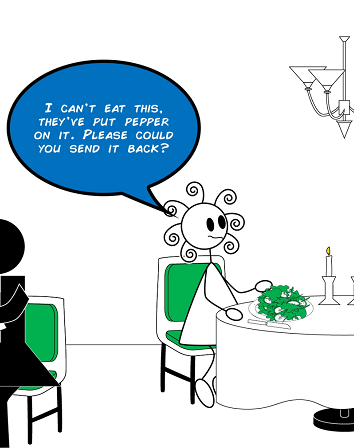
Why am I so critical and how to manage it
Posted: June 13, 2018
The most common definition of to criticise is: "to express disapproval of the perceived faults or mistakes of someone or something." People on the autistic spectrum are often described by other people, as being too critical. Someone who is too critical can be a difficult sort of person to be around. I know that I have a tendency to annoy people by pointing out their mistakes all the time, and that I can ruin other people's enjoyment or experiences if we are out somewhere or doing something and all I do is find faults with the situation...
5 unfounded things people say about autism and how to respond
Posted: June 4, 2018
It seems very common that, when an autistic person tells someone else that they are autistic, the other - neurotypical - person is likely to say one or some of the comments listed below. In this article, I'm going to look at why a neurotypical person might say these things and how I personally might respond to them in order to achieve the 'best' outcome.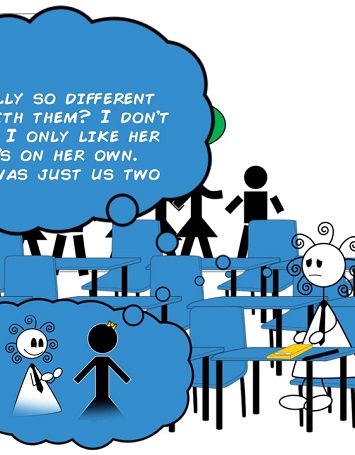
Compartmentalised relationships
Posted: May 25, 2018
I have noticed that other people are much more integrated to their surroundings and their relationships. They can mix their family and their friends (and often involve their family and friends in their work and hobbies). They can mix friends with other friends. This is in contrast to me, in which the different aspects of my life are kept separated. I've noticed that in particular it is easier for me if my relationships are kept separate from each other. I've learned that neurotypical people can feel quite excited by the prospect of meeting new people and introducing them to their social networks and vice versa. Surely this is exactly why people enjoy parties and social gatherings, because of all that "mingling"! I have had quite unusual relationships. I once dated someone for about 2 years and in that time I never met this person's friends or got involved in his social life. I remember my friend thinking this was weird. This was long before I knew I had ASD. It might be a bit weird but it makes sense now why it was this way!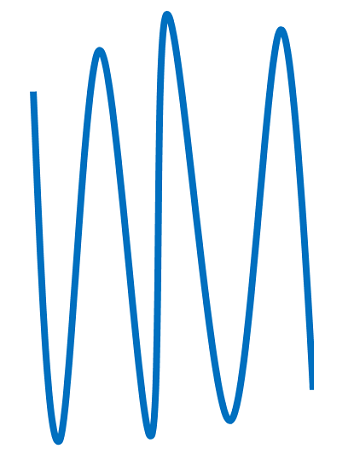
How to reduce massive emotional swings
Posted: May 17, 2018
A lot of people with ASD have very strong, powerful emotions. For me, I have many, many ups and downs. It doesn't take a lot to make me feel VERY positive or VERY negative. I drew this graph to illustrate how I think the emotional pattern is of an ASD person vs a neurotypical person: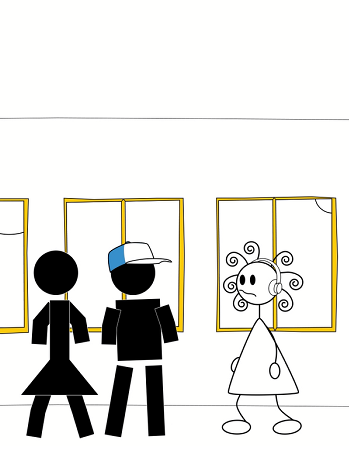
Why small talk matters and how to do it
Posted: May 8, 2018
The definition of small talk is 'polite conversation about unimportant or uncontroversial matters.' Most of us have to make a lot of it! I know that lots of autistic people dislike small talk (including me), but I think it has its benefits and I think there are a couple of tricks you can do to make it a bit easier.
The emotional stages after ASD diagnosis
Posted: April 30, 2018
I'm definitely massively relieved and comforted that I have my diagnosis as it explains my whole life and everything about me, and I have been able to make adjustments that I otherwise wouldn't have thought to make. My relationships with other people and with the world at large are much better now. However, I don't feel quite as happy about my diagnosis anymore.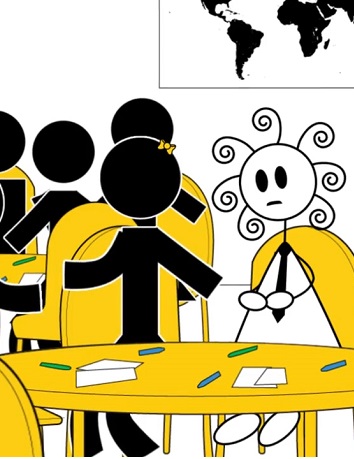
To lead or to follow?
Posted: April 22, 2018
I am probably the perfect example of the classic stereotype of autism. I am very, very solitary - through choice and also because of my quite complex social difficulties. Any involvement with others generally makes me uncomfortable. This experience might be similar for neurotypical introverts so I think that neurotypical introverts will also find this article helpful. One major barrier to being this way is it makes it very hard to work with others in both leader (employer/manager/teacher) and follower (peer/classmate/colleague/team member) roles. Can your base social energy level be increased?
Posted: April 15, 2018
In sports science, there's a theory known as supercompensation. It's a way of improving your base level of fitness. The way to do this, it proposes, is by putting yourself through more exercise just after you've recovered from your previous workout. The time of the next workout is absolutely critical - you have to do it after you've recovered but you can't have too long a gap. This blog article was inspired because the way I weight train is very much through supercompensation methods. My base level of fitness increases regularly. It made me wonder whether this idea could help someone increase their base level of social energy. Let's look at it in more detail: