A social enterprise helping people on the autistic spectrum and the people around them.


Blog
4 Conversation techniques to add to your social script
Posted: 12 months ago
Many autistic people create for themselves a 'social script' to help them know how to interact in social situations. A social script is a guide for planning what to do and say inside a social setting.
The Girl With The Curly Hair uses a social script whenever she meets up with her friends. Specifically, she uses 4 conversation techniques:
10 things I wish my teachers had known
Posted: April 3, 2021
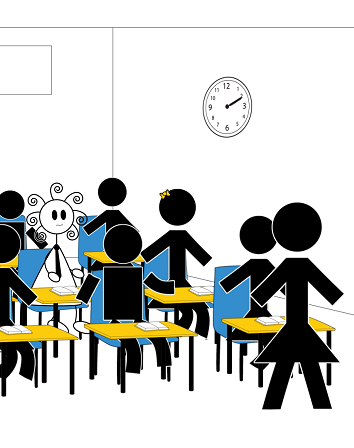
Recently I took part in an interview which asked me about my school days. There were some really good questions and the interview made me reflect on my school experiences when 1) I was just a child and 2) I didn't know I had Asperger's Syndrome. I know now I have Asperger's Syndrome. Now I have discovered a lot of strategies to help me live with my condition. I thought if I wrote an article that highlighted some things my teachers could have known about me, then this might be helpful to some teachers (and parents) now.
Maintaining your Happy Balance
Posted: March 20, 2021
Someone once taught me a very important life lesson. They said, "always ensure you are doing more of what you like and less of what you don't like." I think I'll call this the Happy Balance. When we are doing more of what we like and less of what we don't like, we are likely to feel happy. It might be helpful to regularly reflect on your life and assess 1) the quantity and 2) the weighting of the activities you are doing. You can consider small parts of your life (such as your job or how you spend your weekends) or you can reflect on your life in general.
How do we react to people who are on their own?
Posted: March 6, 2021
I've been watching some of my animations and something that stands out at me in pretty much every film is: how other people respond to The Girl With The Curly Hair when she is on her own. Even though I wrote the scripts, I don't fully appreciate every single learning point captured in a film. In fact, each time I watch one of the animations, I see a different angle or a new perspective. Today I've been noticing the reoccurring theme that The Girl With The Curly Hair is so often on her own - or so often wanting to be on her own - and the different reactions people have to her. Let's have a look at some specific examples:
2 rarely emphasised ways of coping with change
Posted: February 20, 2021
Many people struggle with change and it is well known that autistic people struggle with change even more so. There are primarily two types of change: 1) chosen change and 2) imposed change. The pandemic is an example of an imposed change. If you are interested in learning more about how people react to change, I recommend reading about the Kubler-Ross change curve. The Kubler-Ross model suggests that, after a change, people go through 5 different stages and feel 5 different emotions, and they eventually come to accept the change. The change becomes the new normal and the person gets on with their life. I think that it is quite interesting to note that the way people react to chosen and imposed changes is remarkably similar. Even chosen changes can cause feelings of anger and grief, for example. Although it is helpful to learn how to deal with the emotions associated with change, there are at least two other, lesser talked about, factors that people might benefit from learning to manage. These two things have actually benefited me far more than learning to cope with the 5 feelings in the Change Curve. So I want everybody to know about them! So, here are two rarely emphasised things that happen to us when we go through change and ways to successfully combat them: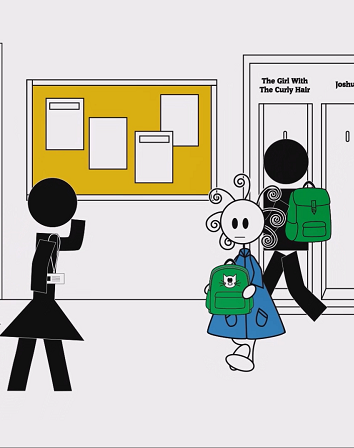
What is it like to be a literal thinker?
Posted: February 6, 2021
Literal thinkers interpret what others say based on the precise or factual meaning of the words used, as opposed to the implied or metaphoric meaning. People on the autism spectrum are often associated with having literal thinking. Some neurotypical people also have literal thinking. Literal thinking has nothing to do with intelligence. One great struggle that comes from having literal thinking is that it can be incredibly difficult to interact with others. Communication becomes very confusing.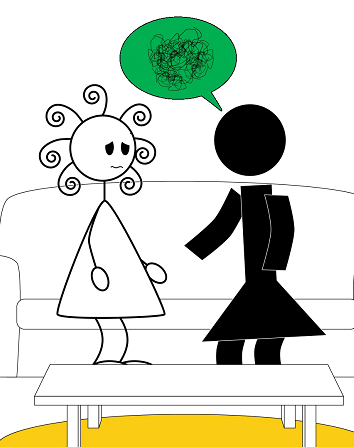
How to improve your listening skills
Posted: January 22, 2021
Listening is a very important component of good communication. Many people consider themselves to be "good listeners"... but are they really?! Just because you are an introverted or a quiet person for example, it does not automatically make you good at listening. Communication is very difficult for autistic people and I have noticed that a lot of autism literature focuses on helping autistic people to improve their understanding and use of body language, tone of voice and eye contact. Listening skills are often overlooked. In this article I will give you some ideas on how to improve your listening skills. These suggestions are also going to be useful to neurotypical people. We should always remember that communication between neurotypical and autistic people can be especially hard. Misunderstandings are common. Therefore, it's even more vital for both neurotypical and autistic people to work on improving their listening skills, so as to be able to communicate more effectively with each other.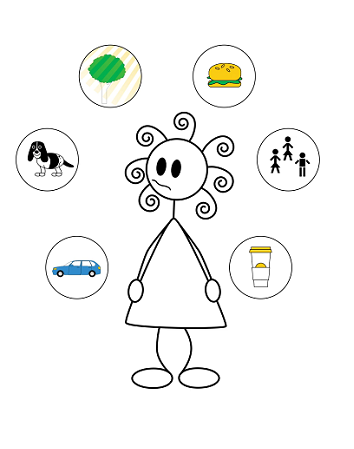
The 6 Golden Rules of Managing Sensations (animation)
Posted: January 11, 2021
The majority of situations can cause an autistic person to feel a degree of uncertainty. Even very common situations, such as going on the train or going to a GP appointment, can contain many unpredictable factors, leading to feelings of uncertainty. Neurotypical people don’t tend to worry to the same degree about uncertainty. They might not even feel that situations can have an uncertain outcome. This might be because they naturally have the flexible thinking skills to know what to do should something unexpected happen.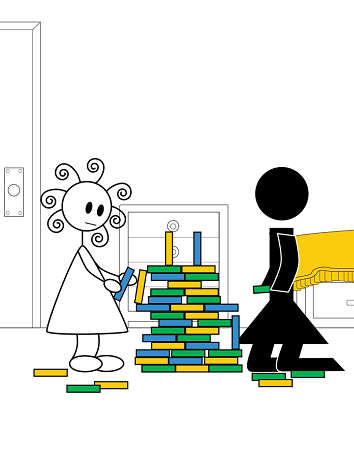
How to be a more constructive thinker
Posted: December 29, 2020
In any situation, we always have a choice over how we behave. We can try to choose to think constructively or we can think destructively. Consider it as though our thinking is either a tool (useful and empowering) or an obstacle (harmful and disempowering). Once this concept is understood, it gives us the ability to positively change our lives. By thinking and behaving as constructively as possible, life can be constructed in the way that we want. Thinking and behaving in a destructive way, on the other hand, can make life worse.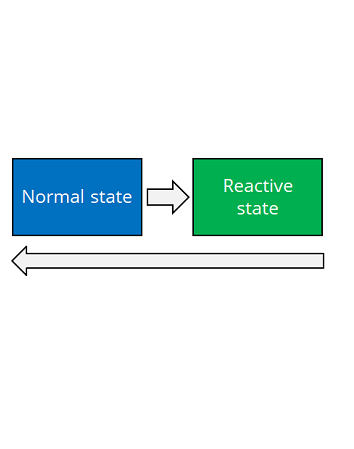
The Anxiety Continuum
Posted: December 19, 2020
Lately I’ve been reading about tendon pathology and there was one concept, called the continuum, that I thought was interesting and could be applied to anxiety as well as tendons! It reminded me of my view on anxiety: anxiety is not always bad. A small level of anxiety can even be beneficial because: It warns us of danger It helps us perform It helps us become more self-aware: it makes us think about what makes us anxious and what we can do about it It keeps us de-sensitised to things The continuum idea means that anxiety is reversible. It can be good and bad. It can get better and worse... I hope this idea might help you or make you think about anxiety in a different way.
The 4 phases of a meltdown
Posted: December 7, 2020
Having done quite a lot of research into the subject, I started to see that there may be a trend in the way autistic people experience meltdowns. The trend that I noticed was that there seems to be different 'phases' of a meltdown. I wonder whether if people are able to identify these phases and understand them, they will be able to anticipate and manage their meltdowns better. Might it also be true that if someone identifies and treats a meltdown early on then some 'symptoms' might be prevented? A person might also find that they will be able to anticipate the duration of their 'attacks', which can help them better plan their life and know when they'll be back to normal.