A social enterprise helping people on the autistic spectrum and the people around them.


Blog
4 Conversation techniques to add to your social script
Posted: 12 months ago
Many autistic people create for themselves a 'social script' to help them know how to interact in social situations. A social script is a guide for planning what to do and say inside a social setting.
The Girl With The Curly Hair uses a social script whenever she meets up with her friends. Specifically, she uses 4 conversation techniques:
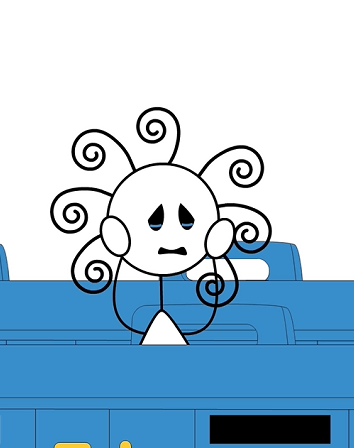
12 reasons autistic people might be sensitive to emotions
Posted: August 22, 2021
Autistic people can be highly sensitive. They might feel upset, disappointed, frustrated or hurt frequently. Family members might sometimes think that their autistic loved one is being “oversensitive” or “overreactive”. If they understood the deeper reasons as to why their autistic loved one is like this, it might help them to be a bit more… Join The Curly Hair Project Community Today This article and our podcasts are available only to member…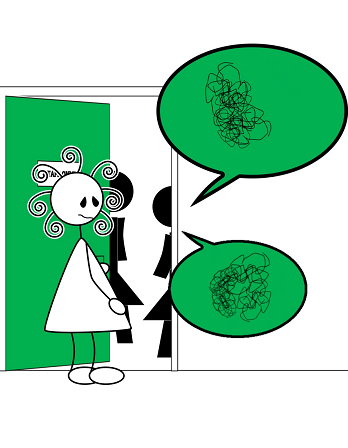
How other people can affect what an autistic person does
Posted: August 8, 2021
Based on my animated film, A Day Working at the Vet’s for The Girl With The Curly Hair, I have been developing e-courses to help autistic people at work and to help employers understand autistic workers. There was one specific scene in this film that inspired me to write this article. In the scene, The… Join The Curly Hair Project Community Today This article and our podcasts are available only to members of our community. If you would like to continue to read this article…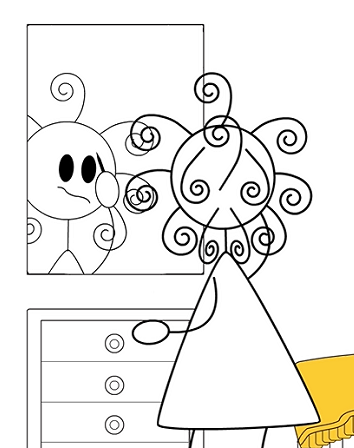
5 ways to build your own identity
Posted: July 24, 2021
Many autistic people go through life with low self-esteem and feeling as though they do not fit in. This can cause them to question their identity because they feel as though they must fit in with others and not the other way round. Some autistic people conform so much to other people’s views and ways… Join The Curly Hair Project Community Today This article and our podcasts are available only to members of our community. If you would like to continue to read this article,…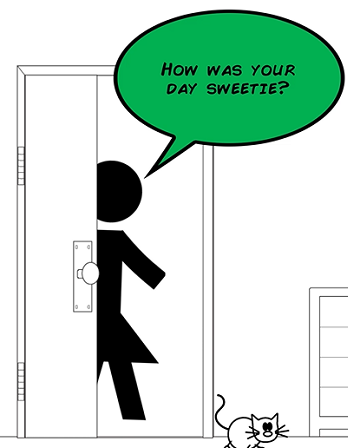
Why can’t autistic people say how they are feeling?
Posted: July 10, 2021
Autistic people can have a lot of difficulties and can be severely impaired in daily life. They can feel highly anxious everyday. The sad thing is that even the people closest to them may not know what they are going through. I suppose there is a similarity here to some of the experiences that depressed people have. In the media, we often hear stories of people who have struggled severely with their mental health but that their family and closest friends were unaware. This brings me to the first reason why an autistic person might be unable to tell their family how they are feeling:
Understanding rules versus guidelines
Posted: June 26, 2021
Autistic people may have a tendency to take things literally. One consequence of this is that they might believe that things said are ‘rules’ and subsequently should be followed strictly and precisely (whereas the person who said those things only meant them to be ‘guidelines’). Taking another person’s comments literally can cause the autistic person… Join The Curly Hair Project Community Today This article and our podcasts are avail…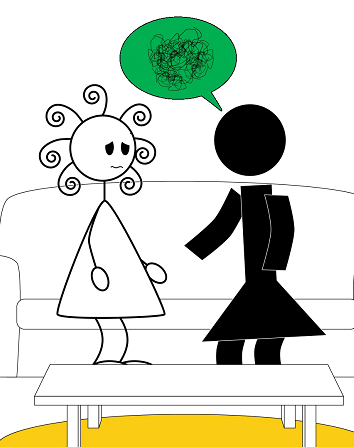
10 of the most important social skills
Posted: June 12, 2021
Social skills are the skills we use to communicate and interact with others. When I think about social skills what immediately comes to mind are things such as being able to make eye contact, know when and how to say “hello” and make small talk. However, I think that there are other far more helpful… Join The Curly Hair Project Community Today This article and our podcasts are available only to members of our community. If you would like to continue to read this arti…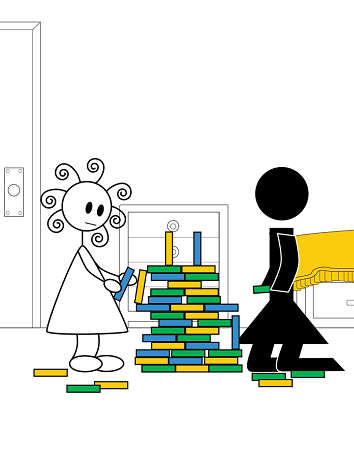
How to tolerate other people’s points of view
Posted: May 29, 2021
When a person has autism it means that they think differently from others. A simple way to understand this is to imagine that there are 20 people in a room. Out of those 20 people, 1 person is on the autistic spectrum. 19 people are thinking one way and the individual on the spectrum is thinking another way. How do you think these circumstances might make the person on the autistic spectrum feel or behave? Maybe... self-righteous and judgmental, confused, isolated and 'different' or doubtful. Here are some ways and suggestions on how to manage these feelings. Most autistic people will probably experience these feelings to different degrees at some point in their life: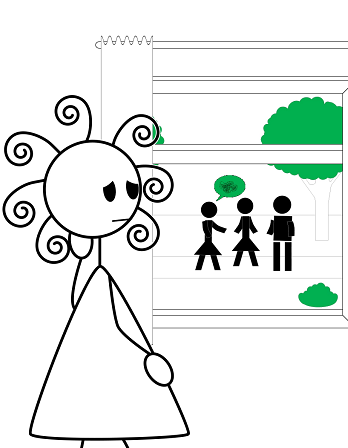
5 questions to ask yourself before you do anything
Posted: May 16, 2021
It is common for autistic people to worry about forthcoming activities. For lots of activities, a small amount of anxiety is normal, however there will be times when there is an excessive amount of anxiety. Although it's good to come out of our comfort zone and do things that are difficult occasionally, it is also important to remember that we do have a choice about the activities we do. If something is causing a significant amount of stress, we must ask ourselves, "do I really need to go through with this?" I decided that there are perhaps 5 main questions people should ask themselves before doing something that is causing anxiety. The answers will then help the person decide whether or not to go through with the activity.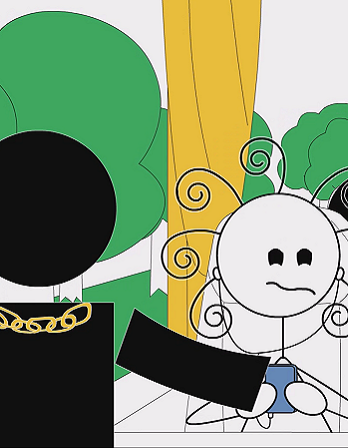
The problem is ‘how’, not ‘what’
Posted: May 1, 2021
One of the greatest challenges that affects me on a day to day basis, and has done throughout my whole life, is not knowing ‘how’ to do something. Not knowing how to do something is a problem that many autistic people have and that many neurotypical people overlook or do not understand. For instance, when… Join The Curly Hair Project Community Today This article and our podcasts are available only to members of our community. If you would like to continue to read th…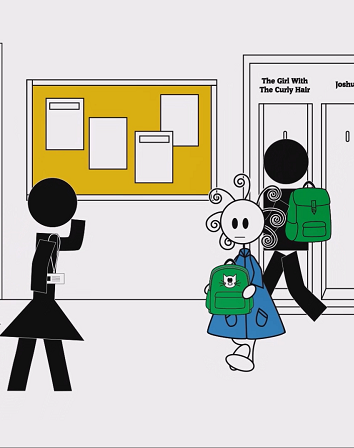
A Day in the Reception Class for The Girl With The Curly Hair
Posted: April 17, 2021
I’m excited to release my new film called ‘A Day in the Reception Class for The Girl With The Curly Hair.’ It shows how a 5 year old on the autism spectrum might experience a day at school. It was very interesting to think about how autism might affect a young child. I learned a… Join The Curly Hair Project Community Today This article and our podcasts are available only to members of our community. If you would like to continue to read this article, along with…