


 Created by award-winning autistic author and entrepreneur Alis Rowe
 Why you should do this course:
- You have patients who are on the autism spectrum
- You have patients who could be on the autism spectrum
- You want to learn more about autism
- You want to be able to better relate to and communicate with autistic people
Course Description:
This purchase will be for Module 7 (7.1, 7.2, 7.3, 7.4 & 7.5) only of the complete course ‘Understanding Autism for Healthcare Professionals‘.
- Narrated presentation: You watch, read and listen to the learning materials.
- Animations: Unique, charming, sweet animations based around the central character, The Girl With The Curly Hair, and her experiences in different situations.
- Visuals and infographics: Colourful diagrams to help you understand.
- Reflective questions: Consider what you have learned and apply it to your own situation.
- Quizzes: Answer questions to check your understanding along the way.
- Notes: Download a copy of the slides and transcripts.
- Certificate of completion: Download and print a certificate for your CV or learning development.
Modules:
7.1 Information Processing and Learning Styles
Understand why it might be helpful to learn what an autistic person’s learning style is and how to incorporate this in your interactions with them.
Covers:
- Understanding different learning styles
- Misunderstanding things that might be ‘common sense’
- How the environment can affect the way an autistic person communicates
7.2 Information Processing and Executive Function
Autistic people often have weak executive function. Understand about the problems that weak executive function can cause for an autistic person.
Covers:
- What is executive function?
- Flexible thinking
- ‘The Freeze Response’
- How to support a patient who has weak executive function
7.3 Information Processing and Attention to Detail
Be made aware of the tendency for autistic people to focus on details rather than the bigger picture.
Covers:
- How having close attention to detail can affect an autistic person’s interactions with you
7.4 Information Processing and Ways of Thinking
Autistic people are likely to have different thought processes from neurotypical people. Learn how their different thought processes can cause them to feel anxious and misunderstand you.
Covers:
- The ways in which autistic people think differently
- How thinking differently can affect an autistic person’s behaviour
- How to communicate with someone who thinks differently
- The advantages of being able to think differently
7.5 Information Processing and Communication
Learn how to help an autistic patient to better understand the information you are giving them.
Covers:
- How to adapt your communication to help an autistic patient better understand what you are saying
- ‘The Filter’
- How to help an autistic person to be able to make a decision
What do you want to learn?
-
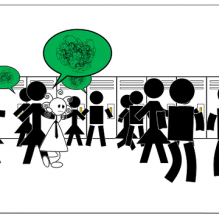
What is it Like to Have Autism? (for Parents)
£42.00 -
What is it Like to Have Autism? (for Education Professionals)
£42.00 -
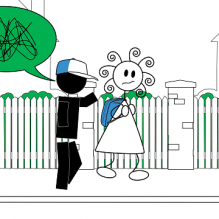
Autism & Socialising for Education Professionals
£42.00 -
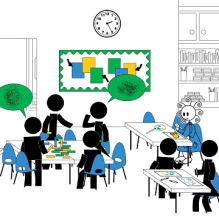
A Day in the Reception Class for The Girl With The Curly Hair (for Parents)
£42.00 -

Autism & Sensory Processing for Health Professionals
£42.00 -
What is it Like to Have Autism? (for Autistic People)
£42.00 -
Understanding Autism for Parents eCourse
£103.99 -
Autism & Socialising for Autistic People
£42.00 -
Autism & Sensory Processing for Parents
£42.00 -
Autism & Sensory Processing for Autistic People
£42.00